Dicionário de iorubá-português e português-iorubá
50,00 €
Indispensable to the study of the Yorùbá language
- More than 45,000 entries;
- More than 58,000 definitions, often presented in context;
- Grammatical, etymological, and cultural information, including dialectal variations;
- Frequently used terms of Yorùbá origin in Brazilian Portuguese, adapted into Portuguese according to Yorùbá pronunciation;
- Revised in accordance with the New Orthographic Agreement;
- Thumb index tabs for easier reference;
- A mini encyclopaedia of written and spoken vocabulary related to the Traditional Yorùbá Religion, absent from other dictionaries.
A trusted reference source of specialised content
Ideal for linguists, religious scholars, and anyone interested in the cultural, spiritual and linguistic influences between Yorùbá and Brazilian Portuguese.
***
SHIPPING NOTICE:
This edition is available for shipping only within European countries, the United States, and Africa.
***
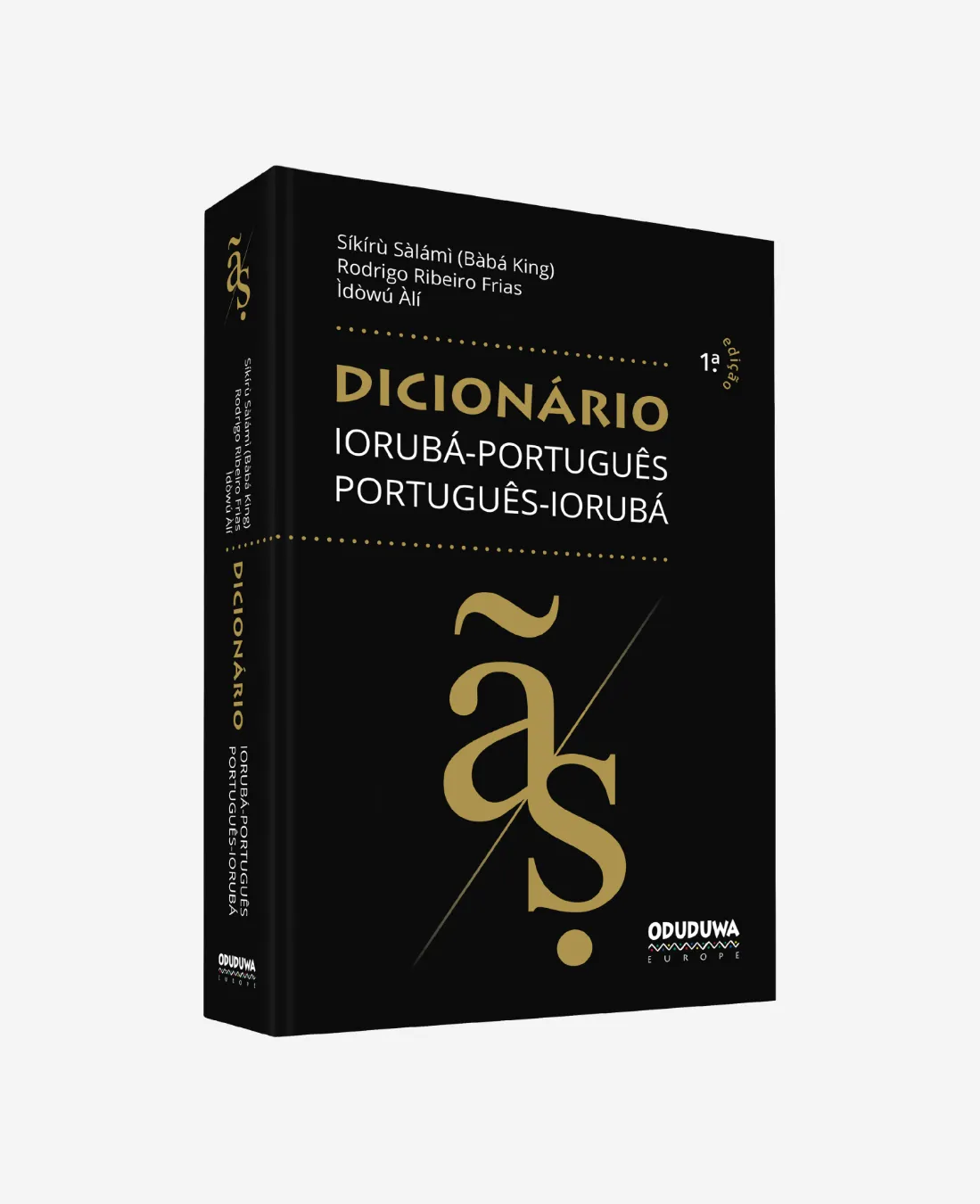
Dicionário de iorubá-português e português-iorubá
Síkírù Sàlámì – Bàbá King, Rodrigo Ribeiro Frias and Ìdòwú Àlí
Publisher: Oduduwa Europe
Year of publication: 2026
ISBN: 978-961-94565-1-4
Pages: 856
Dimensions: 22 x 14 cm
Format: Printed book
Cover: Hard cover
Bilingual version: Yorùbá-Portuguese
Book website: https://babakingdicionario.com.br
This bilingual dictionary is a reliable reference of specialised content: ideal for scholars of linguistics, religious studies, and anyone interested in the cultural, spiritual, and linguistic influences between Yorùbá and Brazilian Portuguese.
It was conceived, compiled, and edited with a grounded commitment to decolonial epistemic justice as a tool of resistance against asymmetrical definitions, cultural erasure, and the violence of unequal semantic valuation, fostering dialogue, mutual respect, and a cooperative stance among people committed to the dissemination of African and Afro-diasporic knowledge.
Carta de apresentação (by Ronilda Iyakemi Ribeiro)
O léxico iorubá: de fontes cristalinas a mares profundos
Lista de símbolos e abreviaturas utilizadas neste dicionário
Guia para consultar este dicionário
Sumário
Decolonizando o pensamento, a língua, a espiritualidade, a religiosidade e a cultura iorubá
Regras ortográficas e linguísticas para a adaptação de termos iorubás (by Maja Mesesnel)
Iorubá-português
Português-iorubá
Apêndices: