
Becoming the voice of the òrìṣà
What Does It Mean to Dialogue with the Gods?
November 2026
What if communicating with the divine is not simply about predicting the future, but about learning to listen, hear, and understand its messages so we can find our way through life?
Ẹ̀rìndílógún Divination
Divinatory practices seek insight into the hidden dimensions of the past, present, and future, helping individuals and communities navigate uncertainty and ease their anxiety about the unknown.
In the Yorùbá spiritual tradition, Ẹ̀rìndílógún, also known as Owó Ẹyọ Ẹ̀rìndílógún or Òrìṣà Dídá, is a divination system that uses sixteen cowries. It is more than a method of seeking answers; it is a sacred means of communication between human beings and the òrìṣà, through whom wisdom, guidance, and understanding can be received.
“Divination is a means of acquiring knowledge otherwise inaccessible because it is hidden from ordinary human perception.”
Rooted in the elaborate and complex system of Ifá divination, which uses ikin and ọ̀pẹ̀lẹ̀, Ẹ̀rìndílógún is based on the observation and interpretation of signs through which the òrìṣà communicate indirectly with humans.

Through the sixteen cowries, signs and symbols become a language through which divine messages can be conveyed. Yet these signs do not speak for themselves. They require interpretation by a trained specialist with the necessary knowledge, experience, and spiritual understanding. What emerges is not merely the revelation of hidden information, but an encounter between the human and divine realms.
This is where an important distinction arises: divination and consultation are not necessarily the same thing.
Divination Versus Spiritual Consultation
Divination seeks to uncover what might otherwise remain beyond our perception – the unseen dimensions of our past, present, and future. Within the Yorùbá understanding of Ẹ̀rìndílógún, however, the term consultation points towards something deeper: a relationship with divine wisdom.
The bàbálórìṣà and ìyálórìṣà, the priests and priestesses who serve in this sacred process, are understood not simply as diviners, but as orientators. Their role is to guide, interpret, and help others find direction through their authorised relationship with the òrìṣà, nature, and the human community.
This distinction between divination and consultation is one of the ideas explored in Ẹ̀rìndílógún – The voices of òrìṣà, which invites us to look beyond the act of interpreting the cowries and consider the deeper principles underlying this sacred practice.
Such a responsibility calls for more than technical knowledge. It requires spiritual integrity, discipline, and an understanding of the principles that govern each consultation.
“To dialogue with the gods is to enter a sacred relationship with the òrìṣà.”
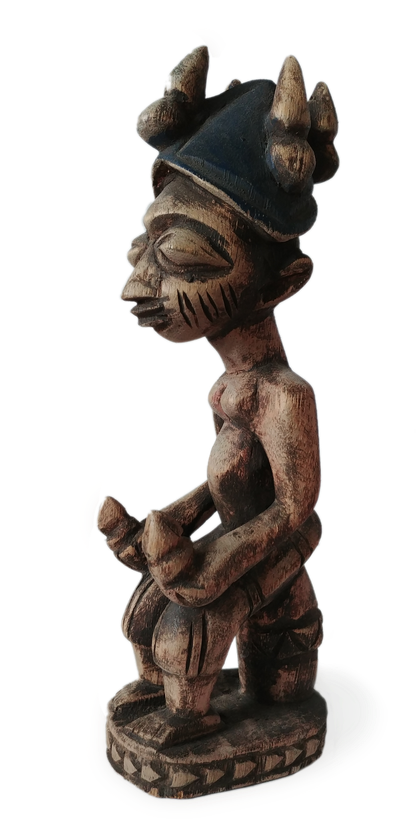
Perhaps, then, to dialogue with the gods is not merely to ask a question and wait for an answer. It is to enter a relationship in which listening, interpretation, wisdom, and responsibility come together.
If the cowries are a language, what does it mean to truly hear what the òrìṣà are saying?
This is where our journey into Ẹ̀rìndílógún begins: not simply with the search for answers, but with the deeper question of how we can approach, understand, and responsibly engage with divine wisdom.
Are you ready to hear the voices of the òrìṣà?
Fáṣọlá
Continue your reading
Ẹ̀rìndílógún — The voices of òrìṣà
Explore the English hardcover edition in the Oduduwa Europe shop.
© 2026 Fáṣọlá. All rights reserved.
Images courtesy of Oduduwa Europe.
Original texts on this blog are the intellectual property of Fáṣọlá unless otherwise stated. Images and other materials credited to the Oduduwa Europe Archive or other sources remain the property of their respective rights holders and are subject to their applicable copyright and usage conditions.
No reproduction, distribution, or republication of content without prior permission from the respective rights holder.